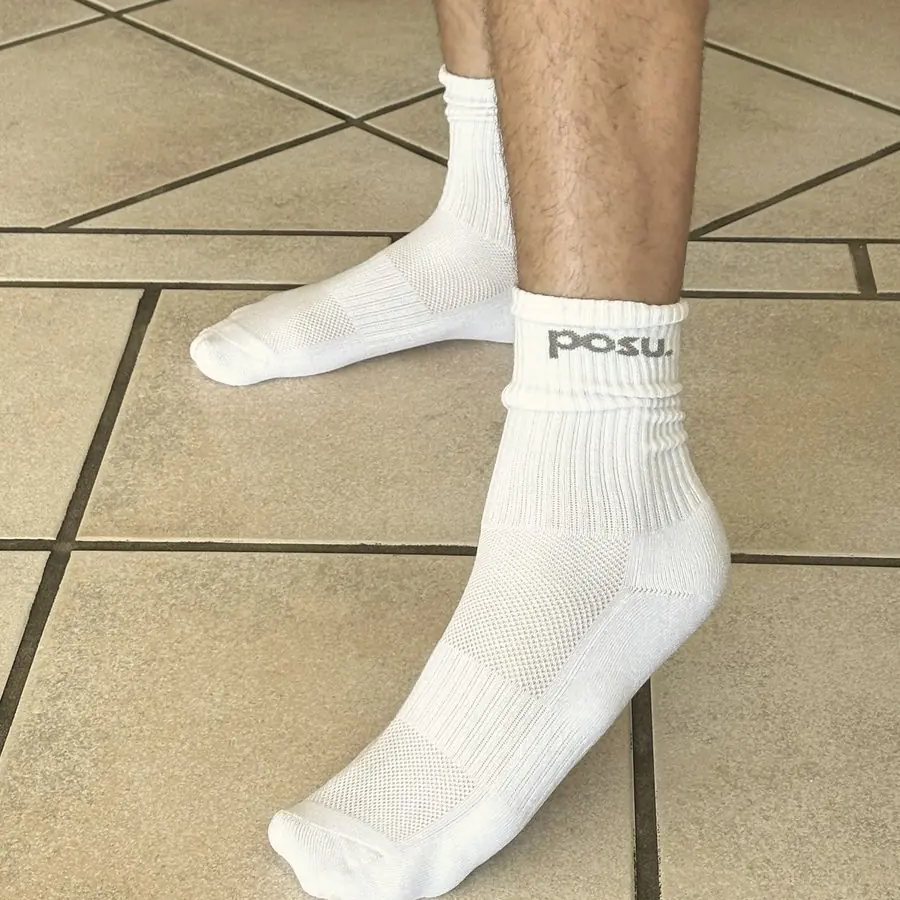
Crew Socks
$19.95
Clean, classic, and made with purpose. 100% cotton for all day comfort and breathability.
Medium or Large. Choose your size at checkout.
Buy a pair“pull our socks up”
It's time to “pull our socks up” (hence posu.) for young people living in adversity. They need us to start having the difficult conversations.
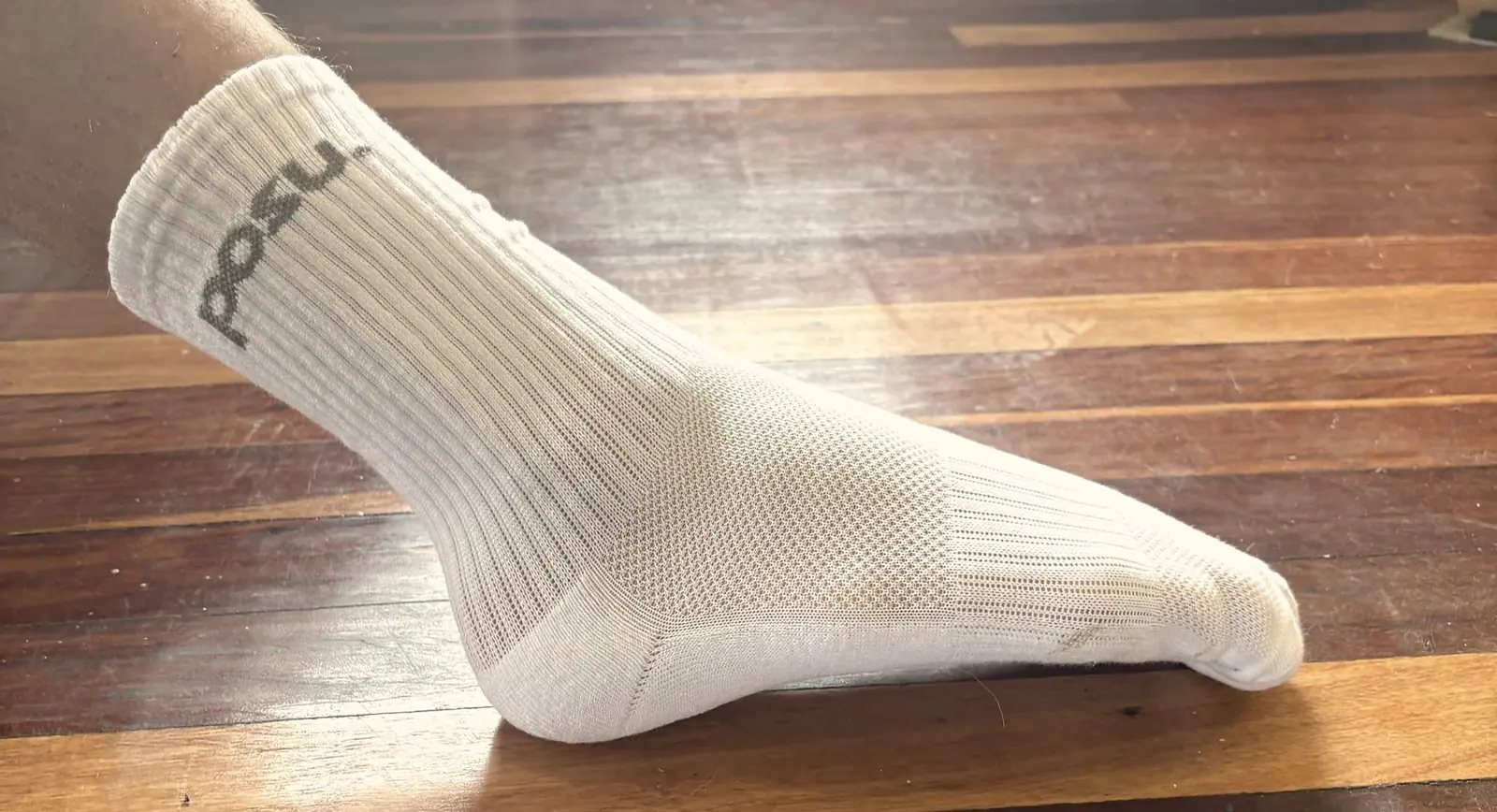
A really good pair of socks that does good. $1 from every pair goes directly to Bravehearts, and posu. puts a pair of socks in the hands of a young person in care every month, with no conditions attached.
Bravehearts' personal safety programs teach children how to recognise unsafe situations, react, and tell.
Counselling and support for children, young people, families, and adult survivors.
The slow, unglamorous work of changing systems so children are safer.
Socks are the small act. This is the systemic action.
Socks that do good, one pair or every month
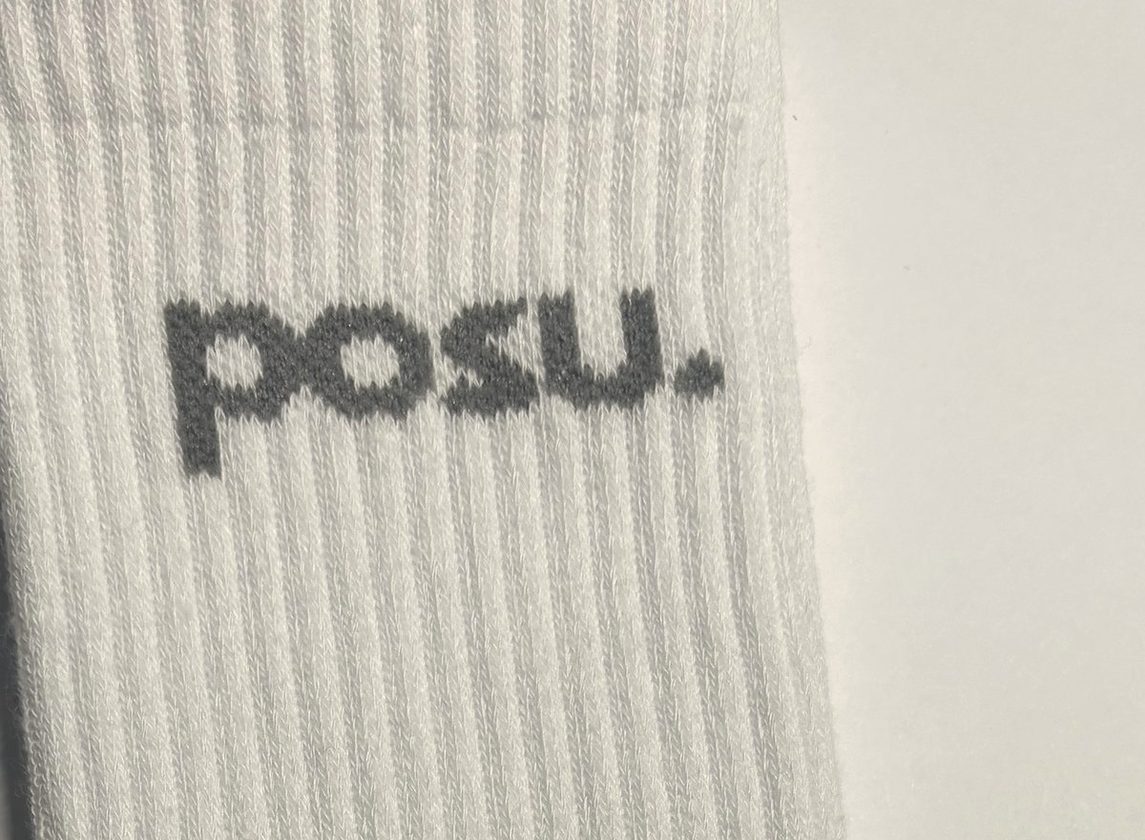
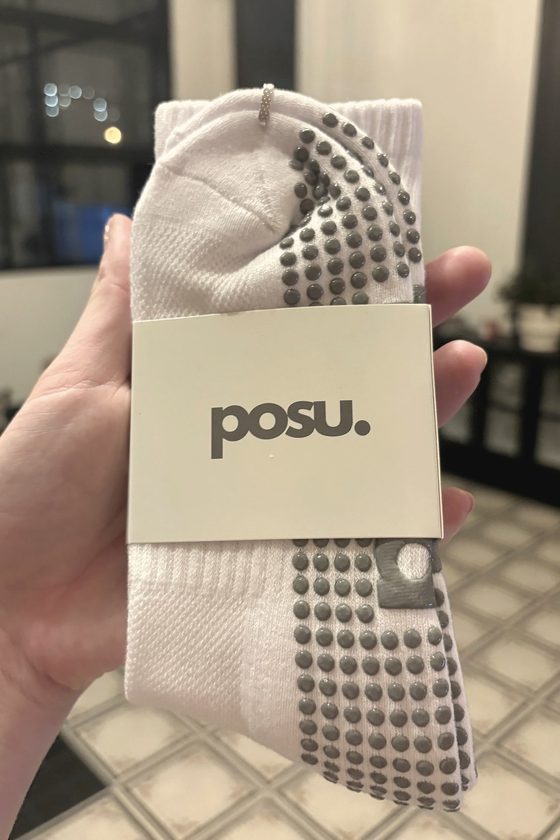
White crew socks with posu. on the cuff. 100% cotton, unisex, and made to start a conversation. $1 from every pair goes directly to Bravehearts.
$19.95
Clean, classic, and made with purpose. 100% cotton for all day comfort and breathability.
Medium or Large. Choose your size at checkout.
Buy a pair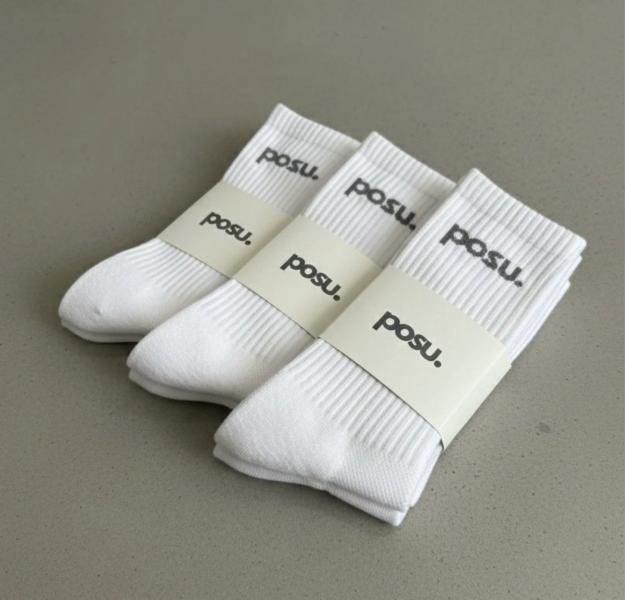
$49.95 Save $9.90
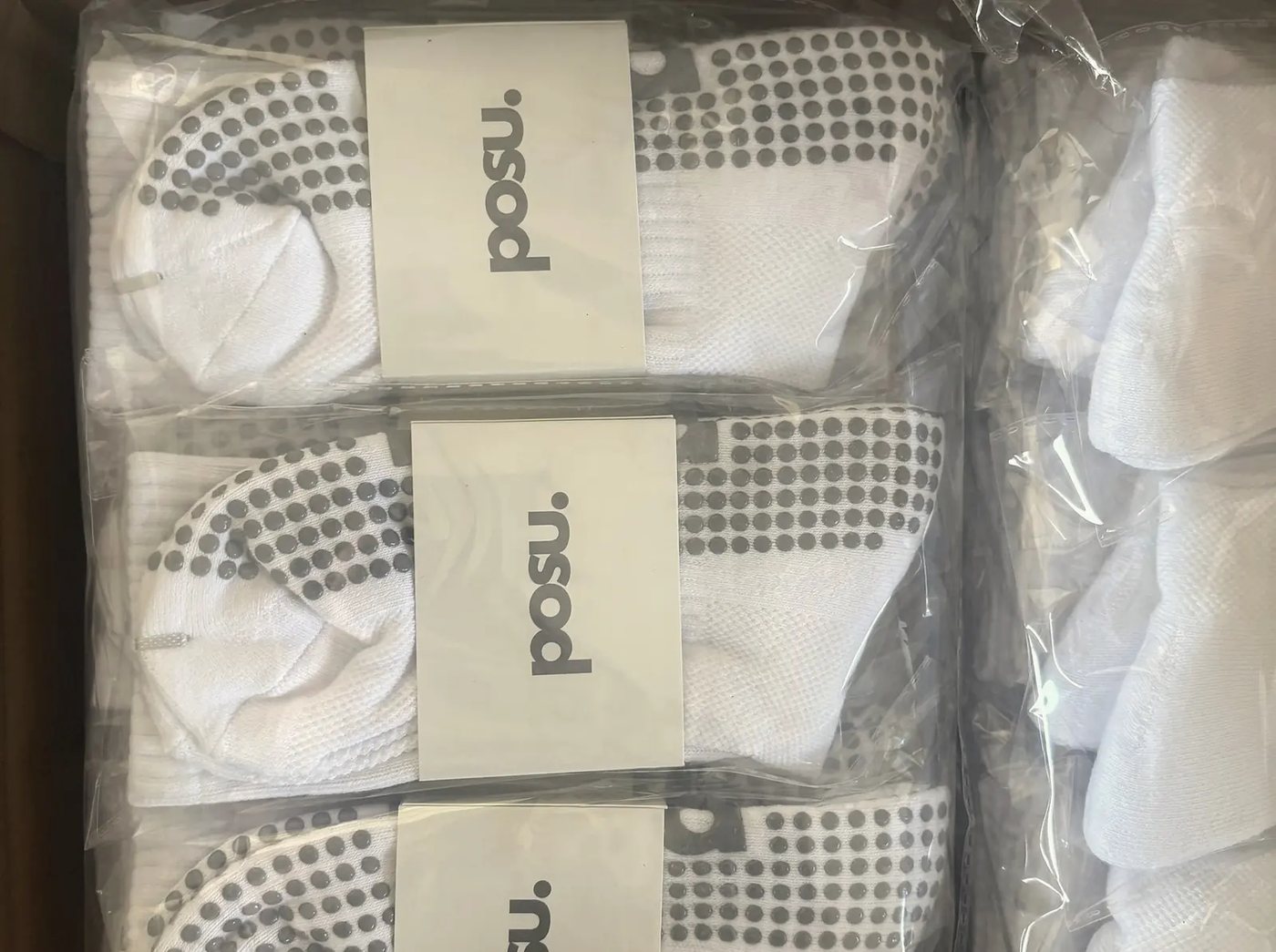
Three pairs of our white ribbed crew socks.
Medium or Large. Choose your size at checkout.
Buy the bundle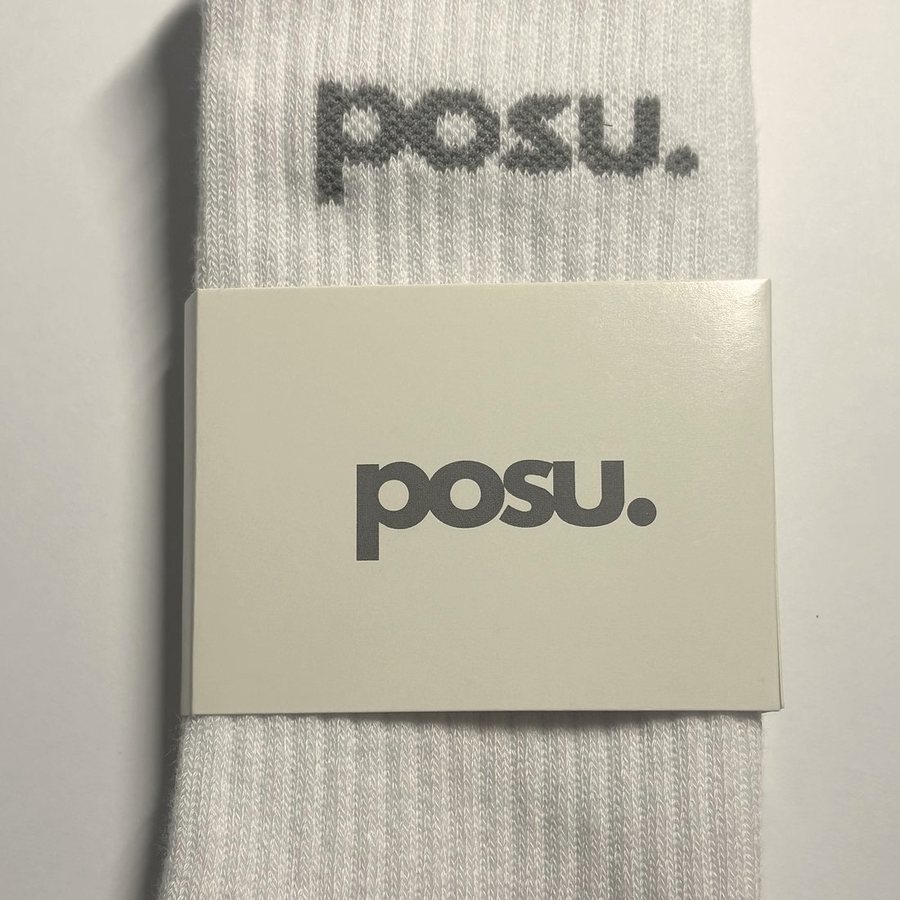
$22.95 a month Opening soon
A pair of posu. every month, sent to your door, with the research and impact updates that come with it. Every membership funds a young person's place in the sock pilot.
Register your interest and you will hear first when the next round opens.
See how it worksSomething else on your mind before you buy? Read the questions or ask us.
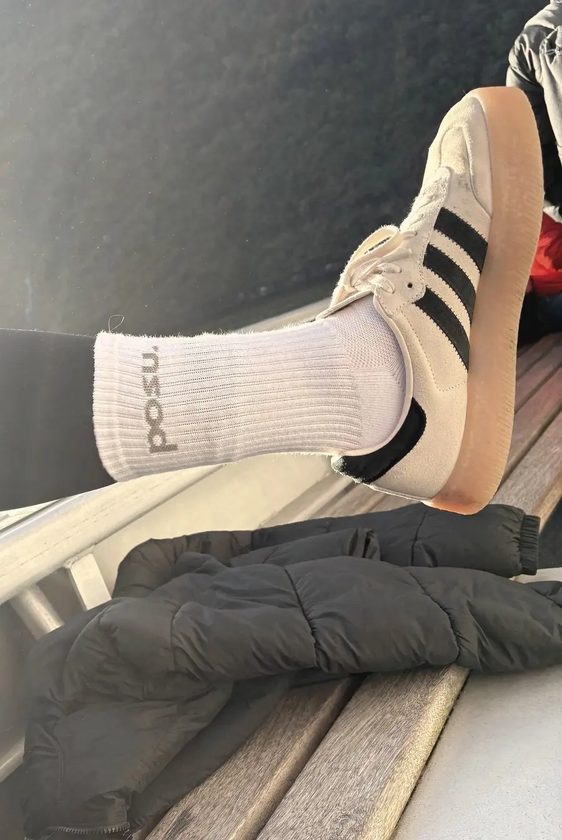
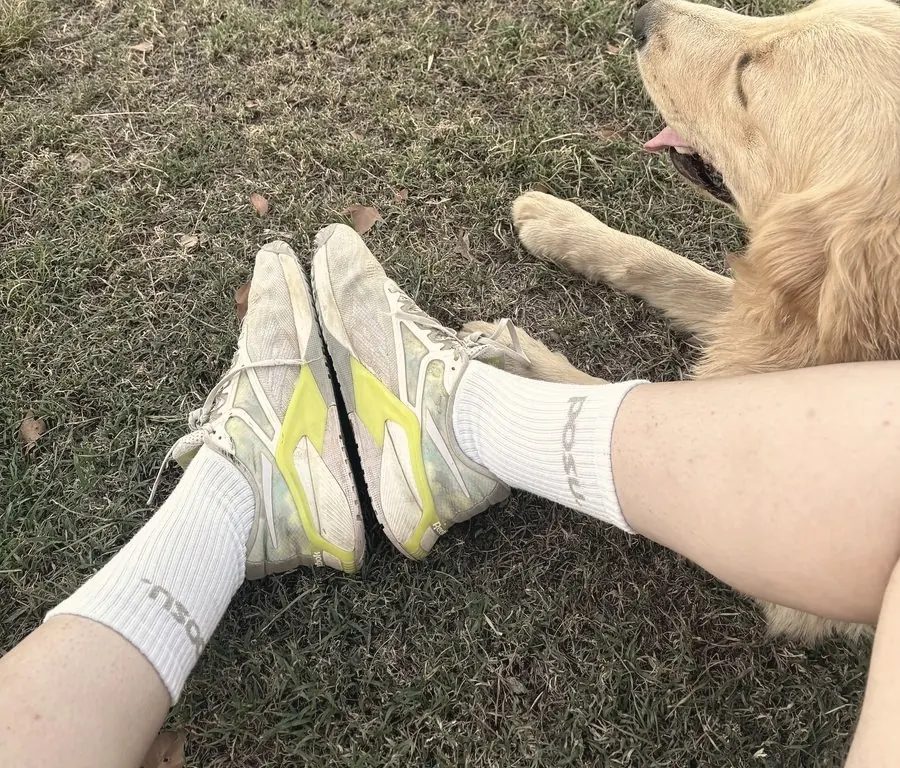
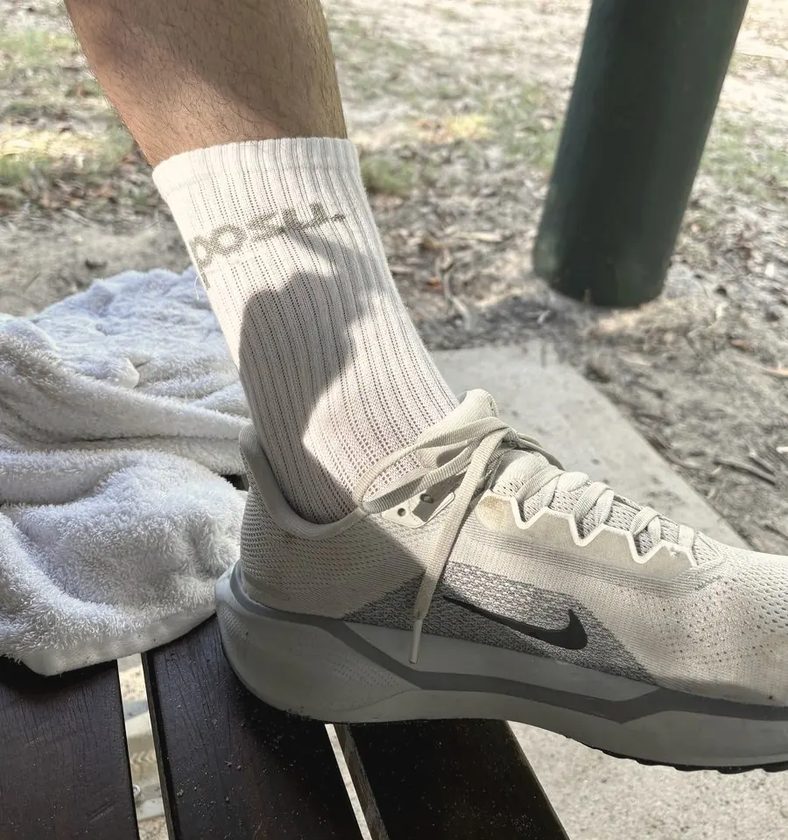
Out on the water, at the park, and at home with Daniel. Real photos, real socks.
Get 10% off your first purchase, and stay up to date on our research and impact as posu. grows.
The posu. pair is our monthly sock project, and it is on its way. Members will get a fresh pair every month and the weekly brain science we teach in the program, in plain words, and each membership will fund a young person's place in the sock pilot.
Small acts. Monthly. That is how habits, and systems, change.
Why we are here, and what you can do about it
posu. exists to start conversations and create change for a really big problem in Australia. We are also advocates for young people doing it tough: disengaged from school, caught up in youth justice, and more.
They are often the ones society turns its back on. Often (not always), they are the ones who need us most.
a well adjusted child, functioning in a system they have never known how to exist in.
I explained it to my dad like this. What do you expect when you put a cake mix into the oven? Cake, of course. Not steak.
The same is true for young people doing it tough. How can we put in all the ingredients of childhood adversity (poverty, physical and emotional abuse, unsafe living conditions, homelessness, incarcerated parents) and expect a well adjusted child to function in a system they have never known how to exist in?
This is the central message we want to teach people. It is my belief that if we want to change the trajectory, understanding this might be part of the answer. Maybe.
This is my attempt to address youth crime in Australia, because adversity is often (not always) related.
It is one potential way to understand why some kids keep stealing cars. We think they are scared of juvie. But maybe juvie is driving the behaviour, because of its predictability.
Regulation, learning, and trust are only possible once a young person's basic needs and dignity are met. For some kids, detention may provide things life outside has not reliably offered.
This is a hypothesis drawn from clinical experience, not a statistic, and it does not describe every young person in youth justice. It does not mean detention is good for them. It means we need to ask harder questions about what they are returning to.
That is where the socks come in. A pair every month is one small thing in the near future that is predictable. Read the thinking behind it.
Someone asked me that once. I gave them three reasons.
I've seen so much money thrown at programs that don't work, because they're not based on anything strong. So I thought, I'll start my own business and try to do it differently, because the answer may be in the foundations.
Going without can often create a deeper sense of shame and disconnection. Nobody wants to be the kid with the smelly socks.
Aimee Floyd, founder of posu.
I am a behaviour support practitioner and a psychology honours student. I spend my working week with children, young people, and the adults who love them. I started a sock company.
The hardest conversations in this country do not happen because nobody knows how to begin them. A sock is a beginning. It is soft, it is everyday, and someone will ask about it.
posu. exists so the conversation has somewhere to start.
Aimee Floyd, founder of posu.
Brain science a young person can actually hold, followed up one pair of socks at a time. One program in two phases: six weeks that build the relationship and the understanding, then six months of showing up, reliably, after the part where help usually stops.
The psychoeducation phase. Relationship building, stabilising, and the science of a young person's own brain in language they can use.
A pair of socks every month, unconditionally, with continued contact and outcomes tracked properly.
The pilot is delivered with the trained practitioners of Foundational Minds, a specialist behaviour support practice. See how it all connects.
Content note: this section talks about child sexual abuse. Support is listed below, and you can skip to what you can do.
28.5%
of Australians have experienced child sexual abuse. That is more than 1 in 4.
Australian Child Maltreatment Study, 2023, a survey of 8,500 Australians. Read the findings.
almost 24 years.
That is how long, on average, survivors who came forward to the Royal Commission took to tell someone. Silence is the condition harm relies on.
Royal Commission into Institutional Responses to Child Sexual Abuse, Final Report, 2017.
silence ends here.
If a child is in immediate danger, call 000.
Big problems are not solved by one heroic gesture. They are solved by a lot of ordinary people doing a small thing, often, until the system has to move.
Say the words out loud at home and at work. If a child tells you something, listen, believe them, and don't promise to keep it secret. Then call Bravehearts on 1800 272 831.
Talking to kidsEvery pair is a small, visible way to start the conversation, and $1 from each goes directly to Bravehearts for their research and work to end child sexual abuse.
ShopRegister for the posu. pair, our monthly sock project, or talk to us about sponsoring places in the sock pilot through your workplace.
SponsorshipBuy the socks. Have the conversation. Know the number to call. Repeat.
The detail behind every idea, one page each
Sponsor places, bring it to your workplace, or refer a young person
Workplaces and organisations can sponsor places in the sock pilot. Every partnership is shaped around the organisation, so the first step is a conversation.
Fund places in the sock pilot for young people in care. We shape every partnership around your organisation.
Talk to usA fixed share of every Minds at Work engagement pays for places in the sock pilot, so the work you buy for your own people does good well beyond your walls.
Visit Minds at WorkFor practitioners, carers, and agencies who want to refer a young person, or to follow how the pilot develops.
Get in touchSponsorship, the monthly sock project, referring a young person, or anything else. We read every message.
Or email hello@posusocks.com.au
When a young person commits a crime, it's not one bad decision. It's the visible outcome of multiple reinforcing variables. Choose any part of the web to see how it connects.
you are looking at
connected to (tap one to follow it)
posu. brings research, real stories, and interactive explainers together to help understand the why, and to drive conversations about the how, towards ending child abuse in Australia.
The research overview: the psychological anchoring model
what if healing trauma didn't require therapy?
We started posu. because neuroscience shows us something powerful: a nervous system shaped by chaos can find safety in small, predictable gestures. Monthly socks aren't just socks. They're a psychological anchor.
a symbolic corrective relational experience that rebuilds trust in human connection
Developed by John Bowlby and Mary Ainsworth, attachment theory shows that early relationships shape our capacity to trust and connect. For young people with insecure or disorganised attachment, predictable care experiences, like monthly socks, create corrective emotional experiences. Each delivery says: “You matter. I remember you. I'm consistent.” Over time, this rewires expectations about relationships and safety.
consistent cues of safety that co regulate a dysregulated nervous system
Stephen Porges' polyvagal theory explains how our autonomic nervous system detects safety or threat. Young people in survival mode (fight, flight, or freeze) can't learn, connect, or make rational choices. Regular, predictable positive experiences, like receiving socks, act as “cues of safety”, helping their nervous system downregulate from chronic stress states into connection and calm.
satisfies the fundamental psychological need for relatedness and belonging
Deci and Ryan's research identifies three universal psychological needs: autonomy, competence, and relatedness. Most interventions for at risk youth strip away autonomy and highlight incompetence. Monthly socks uniquely satisfy relatedness, the need to feel connected and cared for, without stigma or demands. This foundational need, when met, creates conditions for growth in other areas.
cultivates agency (I matter) and pathways (change is possible) thinking
C.R. Snyder's hope theory isn't about wishful thinking. It's about agency (believing you matter) and pathways (seeing that change is possible). For young people who've internalised “I'm bad” or “nothing changes”, receiving regular care breaks this narrative. The socks become evidence: someone cares, consistently. This plants seeds of hope that can grow into belief in a different future.
Monthly socks create a predictable rhythm of care. For a brain shaped by unpredictability, this consistency is therapeutic. It's not about the socks. It's about what the socks represent: someone cares. Someone remembers. You're not forgotten.
Explore the cycle: every variable influences the others
This isn't a simple linear progression. Every variable influences multiple others, creating a complex web of reinforcement. The interactive web is on the main page.
Politicians say it's “bad choices”. The media calls them “troubled teens”. Communities demand “tougher consequences”. But this diagram reveals what everyone misses: these aren't isolated problems. When a young person commits a crime, it's not one bad decision. It's the visible outcome of multiple reinforcing variables. Adverse experiences create low self worth, which drives isolation and poor choices, which invite judgment, which damages self worth further. Social media amplifies every negative pathway. Punishment doesn't break this cycle. It feeds it. This is why the same kids keep appearing in youth justice systems. The solution isn't harder consequences. It's interrupting the reinforcement loops before behaviours escalate.
The adversity cycle: five stages, and where it can be interrupted
This cycle shows how a single adverse event can trigger a cascade of responses that create more adversity, trapping young people in patterns they didn't choose.
The cycle can be interrupted at any point. Early intervention after adverse experiences, trauma informed support systems, teaching healthy coping mechanisms, and reducing punitive responses all weaken the reinforcement loop. Small, consistent acts of care, like the posu. sock pilot, create new neural pathways that help young people escape these patterns.
Beyond better bail laws: seven steps, the human cost, and what changes everything
A year of neuroscience research revealed that small, predictable acts of care can rewire young brains. This is the cycle we're working to break.
These aren't statistics. They reflect the young people we work with, living the cycle every day.
“I tell myself I'm not hungry. I've gotten good at that. By 2pm my hands shake in class but I just keep my head down. Nobody asks anymore.”
Without intervention. Poor academic performance leads to more shame. Gets labelled “unmotivated”. Stops attending school. Pattern deepens.
“Home doesn't feel safe. I don't know what mood I'll walk into. School is loud but at least it's predictable. I take the long way. I stop at the park. Anything to delay.”
Without intervention. Seeks belonging in groups that mirror her instability. Makes choices aligned with “I'm not worth protecting”. Cycle continues.
“They already think I'm bad, so why bother? At least when I live up to it, I'm in control of the story. It's easier to be what they expect than to try and fail.”
Without intervention. Juvenile justice system involvement. Identity solidifies around the “bad kid” narrative. Future opportunities narrow. Cycle escalates.
“Adults say they're here to help but they leave. They all leave. Or they get mad. I learned it's safer to need nothing. I'm getting really good at being invisible.”
Without intervention. Emotional needs go unmet. Self reliance becomes isolation. Mental health declines. By adolescence, intervention is much harder.
“I know how this goes. They'll get frustrated, they'll punish me, they'll prove that I'm the problem. I might as well make it entertaining. At least then I'm not powerless.”
Without intervention. Repeated suspensions. Further disconnection from stable adults. Confirms belief that they're the problem. Cycle reinforces.
“On the field I'm somebody. Off the field, adults just want to control me. They don't actually care. I can feel it. So I shut down or I fight back. Either way, I lose.”
Without intervention. Talent wasted. Opportunities lost. Authority becomes the enemy. Pattern of conflict with systems solidifies. Potential unfulfilled.
Small, predictable acts of care can interrupt these patterns. A consistent check in. A reliable meal. A safe space that doesn't change. These aren't grand gestures. They're sustainable, achievable interventions that rewire developing brains. Every pair of socks funds these small, powerful acts of care.
Regular, scheduled meals create a foundation of reliability. The brain learns: “I can depend on this.” Food security isn't just about nutrition, it's about trust.
Brief, regular conversations that happen like clockwork. “How are you?” asked genuinely at the same time each day builds a pattern of care that the brain can rely on.
Being there, especially when you said you would be. It's not about grand gestures, it's about showing up predictably, even in small ways.
Observing and acknowledging: “I see you.” Noticing a new haircut, a mood shift, an effort made. These micro moments of recognition accumulate.
Creating space for stories without jumping to solutions or criticism. The message: “You can tell me things, and I won't use them against you.”
Physical and emotional safety that's consistent. A place where the rules don't change based on someone's mood. Predictability creates the conditions for healing.
This is the foundation of posu.: creating systems that deliver these predictable acts of care at scale, using something as simple as socks to remind us all that consistency matters.
posu. runs on the Road Builder Method, the same five steps behind every Foundations First Group venture, so simple, unconditional care is measured, not just hoped for.
Monthly check ins, scored the same way each time.
One simple record for each young person.
What shifts across six months.
How their brain works, taught through the six week program.
Care that keeps showing up, and is measured every month.
Aimee Floyd, creator of the Road Builder Method.
Why it exists, what SETT is and is not, what arrives, and what we are careful about
A young person cannot do the work we ask of them until the floor beneath them is solid.
This is the Three Meals and a Mattress Hypothesis. Predictable food, a safe place to sleep, and the ordinary certainty of a day with a shape are not the reward at the end of behaviour change. They are the precondition for it. We spend enormous energy treating the behaviour and almost none securing the floor, and then we are surprised when the behaviour does not move.
The young people this program is built for have rarely had that floor. Their behaviour is most often a reasonable answer to an unreasonable situation, and most have already moved through the child protection system long before anyone reaches them. For them, help almost always stops the moment they struggle, and that withdrawal is the thing that quietly teaches them care is conditional.
Research on adverse childhood experiences shows why the stakes are this high. The effects are not only emotional. They are developmental, they are physiological, and they compound over a lifetime.
The numbers matter, and they still do not do the severity justice. A statistic is a way of not having to picture the child it describes. This program starts from the child.
By the end of the six weeks the relationship exists and the understanding exists. That is the point at which most programs would close the file. It is the exact point where the sock pilot begins.
There is nothing vague about why it is socks. The socks are unconditional. The young person does not earn them, qualify for them, or prove they deserve them, and that is the entire mechanism. In a life where almost nothing is reliable, here is one small, ordinary thing that turns up regardless, every month, with no strings attached.
Socks specifically because they are functional, universally needed, and quietly dignified. They cannot be sold. They do not carry the social complexity of clothing or the logistics of food. They are warm, they are immediate, and every time they are put on they are a reminder that someone thought of this young person this month.
The thinking is grounded in peer reviewed research, and SETT is delivered by practitioners working within their scope and supervision. None of that is the same as proof that this specific model works at scale. That is precisely why it is a pilot, deliberately small, deliberately concrete, with outcomes tracked properly so we are testing whether it helps rather than hoping it does.
For practitioners, carers, and agencies who want to refer a young person, or to follow how the pilot develops: get in touch.
Opinion pieces by Aimee Floyd, Behaviour Support Practitioner and founder of posu.
The most stable place some children have ever lived is a youth detention centre.
Read with care. This opinion piece discusses child sexual abuse and adolescent suicide.
We need to ask: what role does juvenile detention play in driving youth crime?
I once had a simple conversation with my dad about youth crime. We disagreed about what should be done, so I gave him an analogy.
If you put every ingredient of a cake into the oven, what do you expect to take out? A cake, obviously. So what if you fill a child with the ingredients of maltreatment: neglect, violence, instability, fear. How do we honestly expect them to come out well adjusted, trusting, regulated, and ready to function in the world?
A few years ago, in a session with a young person I had worked with for a while, who had been in and out of custody since he was barely old enough to be charged, I asked him a question (whether or not it was the correct question clinically remains up for debate), but tbh, I just had to know the answer: “Don't you feel frightened of going back to juvie? Because the thought of that terrifies me.” The answer, almost verbatim: “Nah Miss, you get mad munchies in there and mad Lynx bottles,” holding his fingers a few centimetres apart to show me the size of the little travel bottle of Lynx. Small, cheap, ordinary things most teenagers never think about twice. To him they were proof of having something that was his, somewhere with a timetable, where the lights came on and the food came out whether or not the adults were coping, and somewhere he was more likely (though not always) to be safe from the harm so often done by the very people who were meant to protect him, including the kind of abuse I now use a pair of socks to talk about, and one that feels uncomfortable to talk about: child sexual abuse.
When someone asks me how many chances these kids should get, my answer is “many of them are still waiting on the first one”. I once talked to a young person about making their bed and got a blank, confused look back, and only understood it when I dropped them home: there was no sheet, no blanket, and a single mattress for three kids to share. We tell these children, in a hundred small ways, that they are the bad ones, and then act surprised when their behaviour is congruent with this narrative.
For a number of years I have worked with children across child protection, out of home care, and youth justice in regional New South Wales and Queensland. I've spent a lot of hours outside court houses, and sat in a number of youth justice centres visiting my clients, and the same pattern keeps surfacing, one I now call my Three Meals and a Mattress Hypothesis: if the goal is getting back to juvie for safety and stability, why would you stop committing crimes? You wouldn't.
A child cannot do the work we ask of them, managing their behaviour, building skills, and recovering from what has been done to them, until the floor beneath them is solid, by which I mean predictable food, a safe place to sleep, and the boring, ordinary certainty of a day that has a shape. Almost two thirds of young people under youth justice supervision have also been through the child protection system, the very one we built because home was not safe. These are not children who went looking for trouble; a large portion of the time they are children that trouble was done to first, and a child who has learned that food is uncertain and that adults are unpredictable is not simply being bad when they fight, run, steal, or shut down. Sadly, they are surviving.
Now hold that against a youth detention centre: three meals, a bed of your own, a routine that does not collapse because an adult is unwell, intoxicated, or absent, and staff who, whatever else is true of that system, turn up. For a child who has never reliably had any of that, custody is not a punishment; in the most uncomfortable sense, it is an upgrade. On an average night last year there were more than 880 children in detention in Australia, according to the Australian Institute of Health and Welfare, and of those released, around seven in ten were back under youth justice supervision within six months, and more than eight in ten within a year. But a number is the most dishonest way I know to introduce you to one of these children, because it cannot show you a fourteen year old talking about a can of deodorant the way other children talk about Christmas. It is far worse than the data can convey.
What if some young people are not put off by detention, but quietly drawn back to it, because part of them is trying to return to the only structure that has ever held them, even though they could never put that into words?
I want to be clear about what I am NOT saying. This does not justify youth crime, but I do think it might start to explain it. I'm not saying all young people who come into contact with the justice system come from this background (however, stats show an over represented portion of kids do). I'm not ignorant either, and I won't pretend detention is always a safe place, because children have been harmed inside these places too, in the very ways the system exists to prevent. This is not a theory of all offending. It is simply my attempt to name a justice problem inside the children I actually sit across from, week after week, in real rooms in real towns, and it comes from the experience of sitting next to them in court or juvie.
I don't have the answer, and what fails in this issue, again and again, is the “confident solution” offered by someone who has never had to sit across from one of these children. What I have is the question, and one small thing I am testing against it: the monthly sock pilot through my sock brand, posu. After a six week psychoeducation program, a pair of socks arrives every month for six months, wherever the child is, with nothing asked in return: not good behaviour, not staying out of trouble, nothing. For once the care does not stop the moment the child does something wrong, and a child who knows another pair is coming next month has, however small, a reason to still be here next month, which in this work is not simply a figure of speech.
So I won't close with a five point plan, because a plan would be dishonest about where this work really is. I will ask you instead to picture the child who tells you, plainly and without asking for sympathy, that he is looking forward to going back to juvie because of a can of deodorant and a packet of snacks, and to ask yourself what we have built when a detention centre is the most reliable home a child has known. And then the harder question, the one I cannot put down: when a young person keeps offending, are they failing to learn the lesson, or are they telling us, in the only language we have left them, exactly what they needed from us: three meals and a mattress (and maybe a pair of socks).
If anything here raised something for you, support is available. Lifeline 13 11 14. 13YARN 13 92 76.
PS. For anyone interested in the theories that support this: posu. is built on attachment theory (Bowlby, 1969), trauma informed care, and unconditional positive regard (Snyder, 2022). The socks are not intended as a material solution to trauma; they are a repeated relational signal. For young people who have often experienced care as conditional, inconsistent, or withdrawn when they struggle, the monthly arrival of socks offers a small but concrete experience of reliability. The intervention uses predictability, continuity, and non contingent care to create a modest future anchor: something is coming next month, and someone has remembered you. In psychological terms, the socks operate as a tangible cue of secure connection, helping translate abstract ideas like trust, hope, and unconditional regard into something the young person can physically receive.
The safest claim is not “socks heal trauma”. It is: small, reliable, unconditional acts can become psychologically meaningful when they interrupt a young person's expectation that care is temporary, conditional, or withdrawn after mistakes.
References
Bowlby, J. (1969). Attachment and Loss: Vol. 1. Attachment. Basic Books.
Rogers, C. R. (1957). The necessary and sufficient conditions of therapeutic personality change. Journal of Consulting Psychology, 21(2), 95 to 103.
Snyder, C. R. (2002). Hope theory: Rainbows in the mind. Psychological Inquiry, 13(4), 249 to 275.
Felitti, V. J., Anda, R. F., Nordenberg, D., et al. (1998). Relationship of childhood abuse and household dysfunction to many leading causes of death in adults. American Journal of Preventive Medicine, 14(4), 245 to 258.
Brunzell, T., Stokes, H., & Waters, L. (2016). Trauma-informed positive education: Using positive psychology to strengthen vulnerable students. Contemporary School Psychology, 20, 63 to 83.
Levenson, J. S., Willis, G. M., & Prescott, D. S. (2018). Incorporating principles of trauma-informed care into evidence-based sex offending treatment. In New Frontiers in Offender Treatment. Springer.
McAlpin, F. (2018). Trauma-informed case management practice for youth experiencing homelessness: Connection, healing and transformation. University of Pennsylvania.
Timmer, S. G., Hawk, B. N., & Washington, A. M. L. (2022). Trauma-informed care for maltreated children: Evidence-based treatments from a developmental perspective. In Handbook of Child Maltreatment. Springer.
Aimee Floyd, B Psych Sci, Hons (Candidate). Behavioural Science Consultant and Practitioner, Foundations First Group
posu. grew from a very simple idea: sometimes care starts much smaller than we think.
Many people move through systems without the psychological anchors most of us take for granted: a safe person, unconditional care, somewhere they belong, or even basic things like clean socks and something that feels like their own.
I believe small acts do not have to be complicated to matter.
A pair of socks will not solve homelessness, trauma, disadvantage, or youth justice involvement. But it can communicate something important. Someone noticed you. You matter. You deserve care without having to earn it first. And there is one small thing in the near future that is predictable.
posu. is about those small moments of unconditional care, and the belief that simple, thoughtful actions can create meaningful ripples.
Foundational Minds is committed to the bigger work, the science, the systems, and better support, but I also do not want to become so focused on solving complex problems that we forget the value of doing something simple and human today.
I cannot change what happens to every young person who comes through my door. I am willing to commit to socks, for now, as a first step.
Aimee Floyd, Behaviour Support Practitioner, B Psych Sci Hons (Candidate)
“How many second chances do these young people get?” is something we all hear a lot about kids tied up in youth justice. My response is always the same: a lot of these young people are still waiting on their first.
Some children grow up with safety, consistency, people who notice when they are struggling, and adults who have the time and resources to understand what they need and to teach them ways of having those needs met appropriately. Others do not.
By the time we meet them, we can be looking at behaviour, diagnoses, school refusal, justice involvement, placement breakdowns, or relationships that are already under enormous pressure. But those things rarely tell the whole story of a person.
At Foundational Minds, I believe good support should combine high quality science with genuine human understanding. That means structured assessment, high quality data, and systematic processes. It also means being curious, compassionate, and willing to look beyond what is immediately visible.
Science matters because people deserve better than guesswork. Data matters because assumptions can be wrong. And compassion matters because behind every behaviour is a human being trying to navigate the world with the skills, experiences, and supports they currently have access to. For some people, the only way they have been taught to communicate is through violence, because that is all they have seen and all they have ever been taught.
I explained my work to my Dad a few years ago by asking him a simple question. When you put the ingredients of a cake mix into the oven, what do you expect to come out at the end? Do you expect a piece of steak? His obvious answer was no, he would expect a cake. Exactly, I said, and human beings are no different. If the ingredients put into a child at a young age are crime, anger, harm, and rejection, how on earth could we expect a well adjusted, functioning human being to come out at the end? It makes no sense.
We may not be able to change someone’s beginning. We can become much better at understanding, and helping to shape, what happens next. Foundational Minds is built on that exact premise.
Aimee Floyd, Behaviour Support Practitioner, B Psych Sci Hons (Candidate)
Here's what they don't tell you about working in regional mental health: you get really good at spotting patterns. The 15 year old who's attempted suicide three times. The kid who can't maintain eye contact. The one who flinches when you move too quickly. You start seeing the invisible threads that connect childhood trauma to every crisis that follows.
And then you realise the system isn't designed to cut those threads. It's designed to respond after they've already strangled someone.
So I spent a year buried in neuroscience journals, attachment theory, and trauma research, asking one question: what if we could intervene before the crisis? What if something as simple as a pair of socks, delivered predictably every month, could actually rewire a traumatised young brain?
That question became posu. Pull Our Socks Up. And yes, I know how it sounds. A sock brand tackling child sexual abuse? But stay with me, because the science behind this is solid.
Let's talk about what trauma does to developing brains.
When kids experience abuse, their nervous systems learn that the world is unpredictable and dangerous. This isn't just psychological, it's biological. Stephen Porges' polyvagal theory shows us that traumatised children get stuck in survival mode, their nervous systems constantly scanning for threat. They can't learn, connect, or regulate emotions properly because their brains are too busy trying to keep them alive.
Attachment theory tells us these kids develop what John Bowlby called “insecure internal working models”, basically, a blueprint that says people can't be trusted, needs won't be met, and safety doesn't exist. These blueprints shape everything: relationships, self worth, the ability to ask for help.
And here's the kicker: in Australia, we're talking about 1 in 4 people who've experienced child sexual abuse. When I'm sitting across from that 15 year old in crisis, I'm not seeing an individual tragedy. I'm seeing a predictable outcome of a childhood where their nervous system learned the world is hostile and their needs don't matter.
The silence around child abuse isn't neutral. It's structural. And it's killing kids.
Now connect that to youth crime, because nobody wants to, but we have to. The Adverse Childhood Experiences (ACEs) research is clear: trauma doesn't just increase suicide risk, it increases the likelihood of every poor outcome you can think of. Substance abuse. Incarceration. Homelessness. We love to talk about “youth offenders” like they're a separate species, but most of them are just kids whose nervous systems never learned what safety feels like.
We can either keep funding crisis response, or we can start building the neurobiological conditions for resilience before the crisis hits.
This is where the socks come in.
I know it sounds absurdly simple, but that's the point. Research on therapeutic relationships shows that healing doesn't come from big interventions, it comes from small, consistent, predictable acts that signal safety. When a young person receives something tangible, every single month, without having to earn it or prove they deserve it, their nervous system starts to learn a different pattern.
The sock becomes what attachment researchers call a “transitional object”, a physical anchor to the idea that someone is thinking about them, that their needs matter, that care can be reliable. Over time, this predictability starts rewiring those insecure internal working models. It's not therapy, but it creates the neurobiological foundation that makes therapy possible.
This is what the Sock Pilot tests. Monthly sock deliveries to at risk young people, paired with simple check ins, to see if this kind of low barrier, high consistency care can measurably impact wellbeing and reduce suicide risk. The neuroscience says it should work. The attachment theory says it should work. Now we need to prove it does.
But posu. isn't just the pilot. It's a brand built on the idea that everyday objects can carry social justice. Every pair of socks sold funds the pilot, supports Bravehearts' prevention programs, and starts conversations Australia desperately needs to have about child safety.
We're not just selling socks. We're building the neurobiological infrastructure for a generation of kids to believe they matter.
Here's what I need you to understand: this whole thing is grounded in a year of comprehensive research. I've reviewed the literature on neuroplasticity, polyvagal theory, attachment interventions, and trauma informed care. I've mapped the gap between what the science says works and what our systems actually do. And I've designed something that sits in that gap, small enough to be scalable, evidence based enough to be rigorous, and human enough to actually reach kids the system has already failed.
The full research paper will be published soon, peer reviewed and public, because I want other people to build on this. I want youth workers, psychologists, community organisations to see that you don't need a million dollar budget to create interventions grounded in neuroscience. You just need to understand how brains heal, and you need to give a damn.
I'm frustrated. I'm exhausted. I've sat through too many crisis meetings about kids who didn't have to be in crisis. But I'm also weirdly optimistic, because the research is clear: small, consistent acts of care work. They change brain architecture. They build resilience. They save lives.
So yeah, I'm building a sock brand. Because when the systems fail, you build something new. And sometimes the most radical thing you can do is prove that caring consistently, in small, tangible ways, is enough to shift the trajectory of a young life.
That's posu. That's the science. And that's why I'm all in on socks.
Aimee Floyd, Behaviour Support Practitioner, B Psych Sci Hons (Candidate)
Every week, another headline blames “youth crime”. But if you sit with these kids long enough, the pattern isn't defiance. It's injury. Most of the young people we lock up grew up in chaos long before they caused any. Research shows that almost every child in detention carries layers of trauma, disability, or neglect. In Western Australia's Banksia Hill Detention Centre, more than a third have Fetal Alcohol Spectrum Disorder, and nearly nine in ten have a severe neurodevelopmental impairment. Nationally, most are on remand, still waiting for their day in court.
We call them “offenders”, but neuroscience calls them “dysregulated”. Polyvagal Theory reminds us that a nervous system stuck in survival mode can't learn or comply. Attachment theory shows what happens when safety is inconsistent: control becomes a stand in for love. Self Determination Theory adds that people need autonomy, competence, and relatedness to thrive, the very needs our systems strip away when they punish instead of connect.
So when a young person lashes out, it isn't a lack of morals; it's a body remembering danger. When a teenager refuses school, it isn't laziness; it's their brain trying to protect them from another experience of failure or shame. We can't heal those wounds by doubling down on “tough love”. Tough has never been love. It's just control in disguise.
Real prevention is quieter. It's consistency. It's the teacher who notices. The coach who texts back. The pair of socks that arrive every month to say, you still matter.
That's why I started posu., a small idea rooted in big science. Every pair of socks carries a message of hope and belonging, using predictable, nurturing gestures to act as psychological anchors for young people whose lives have never been predictable. It's grounded in the same evidence that drives suicide prevention: stable relationships, repeated safety, and genuine connection.
If we want to break the cycle of harm, we have to start with something radically simple: treating young people as nervous systems to regulate, not problems to punish. Tough might keep order for a day, but tenderness changes a lifetime.
Aimee Floyd, Behaviour Support Practitioner, B Psych Sci Hons (Candidate)
The conversation gets easier when it is smaller. You do not have to explain abuse to protect a child. You teach body safety, you use the real words, and you become the adult who does not flinch.
The large majority of children who are harmed know the person who harms them. That is why prevention has moved to protective behaviours: teaching children about their body, their early warning signs, and the trusted adults they can tell, whoever the person is.
Two ideas sit at the centre:
Underneath all three, use the real names for body parts. Children with accurate words are easier to understand, harder to confuse, and more likely to be believed.
What you do in the next two minutes matters more than anything you say later. Stay calm, even if you are not. Listen without interrupting. Believe them. Say: thank you for telling me, you did the right thing, this is not your fault.
Do not ask leading questions or push for detail. Do not promise to keep it secret. Do not confront the person yourself.
Then act. If a child is in immediate danger, call 000. In NSW, the Child Protection Helpline is 132 111. For guidance and support, Bravehearts 1800 272 831.
posu. is part of Foundations First Group. Each brand does one job, and a pair of socks only reaches a young person because all of them do theirs. Choose a brand to see how it connects.
The name is a play on “pull our socks up”. It means two things on purpose: good socks that stay up, and a reminder that all of us need to pull our socks up for these kids. We use socks to start the conversations about child abuse that Australia needs to have.
For every pair sold, $1 goes directly to Bravehearts, an Australian organisation working to prevent and respond to child sexual abuse. A portion is reinvested into posu. to design and trial evidence based programs, and the rest helps cover the cost of the socks and the rollout of the pilot.
One program in two phases. Six weeks of SETT, the psychoeducation phase, then six months of a pair of socks every month, unconditionally, with continued contact and outcomes tracked properly.
100% cotton.
Yes.
Medium is US 7 to 9 (22cm x 22cm) and Large is US 8 to 11 (24cm x 24cm). If you are between sizes, go up for a more relaxed fit.
Our monthly sock project. A pair of posu. every month, sent to your door, with the research and impact updates that come with it, for $22.95 a month. Every membership funds a young person's place in the sock pilot. It is opening soon: register your interest and you will hear first when the next round opens.
$1 from every pair goes directly to Bravehearts, whose work includes personal safety education for children, counselling and support for children, families, and adult survivors, and the advocacy and research that change systems so children are safer.
Stay calm, listen, and believe them. Do not push for detail or promise to keep it secret. If a child is in immediate danger, call 000. In NSW, the Child Protection Helpline is 132 111. For guidance, Bravehearts 1800 272 831. There is more in research, translated.
Orders are sent within 1 to 3 business days. Delivery is estimated at 3 to 7 business days within Australia. Shipping is a flat $9.95. For international orders, send us a message and we will arrange it.
Returns are accepted within 30 days of delivery if the socks are unworn, unwashed, and in their original packaging. Email hello@posusocks.com.au with your order number and the reason for the return, and we will send instructions. Return shipping is at your cost unless the item is faulty or incorrect.
Yes. Share the message, follow along, and start the conversation. Workplaces can also talk to us about sponsorship.
The trained practitioners of Foundational Minds, a specialist behaviour support practice. Both posu. and Foundational Minds are part of Foundations First Group.